


Fluxx
3.7227.00 Reviews
App Specs
- Version
- 2.1.9
- Updated On
- License
- Free
- Downloads
- 100,000+
- Developer
- Playdek, Inc.
- Categories
- Board
- Platform
- Android
Screenshots

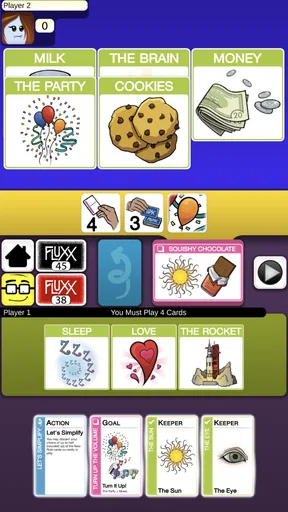
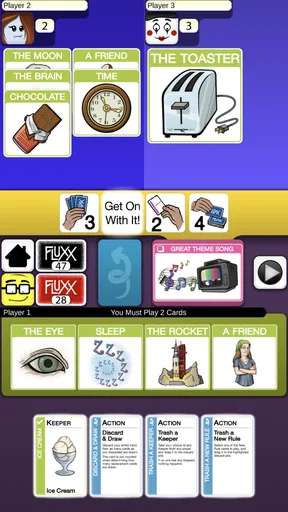
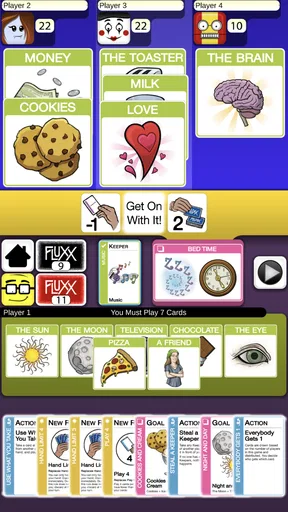

 Analysis by AppCompare
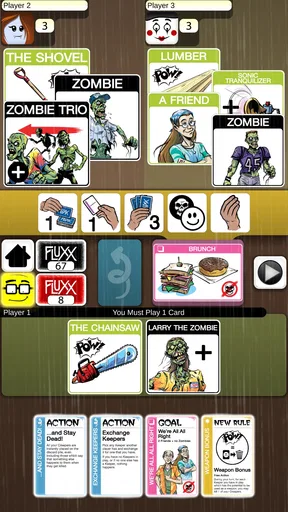
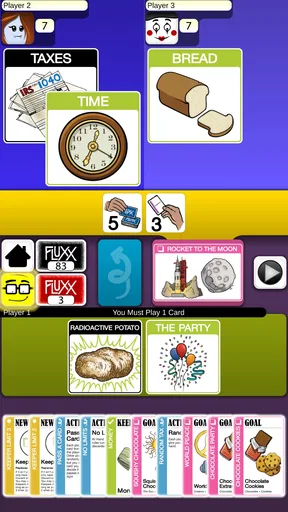
I like card games that can turn a familiar evening into something unpredictable, and Fluxx fits that mood unusually well. It is a free board-category game from Playdek, Inc. in which the rules and goals can shift while you play, so a match rarely follows the same path twice. That makes it a natural choice for a shared phone or tablet when several people want a quick game without preparing a physical deck.
My first impression is that this is less about carefully building a long-term strategy and more about reacting intelligently to sudden changes. You may begin with one objective in mind, then watch another player introduce a new goal or rule that changes what matters. The appeal is easy to understand: everyone has to pay attention, and even a player who seems behind can sometimes recover with the right card.
That same unpredictability is also the main reason I would not recommend it to everyone. If you prefer board games with a fixed objective, a stable turn structure, and a clear route from the opening move to victory, this can feel chaotic rather than clever. If your household enjoys surprises, table talk, and the occasional reversal of fortune, it has much more to offer.
How Fluxx works in a shared household
The best everyday use I found for Fluxx is a short group session on a device that can be passed from one person to the next. Imagine a quiet evening when two or more people are waiting for dinner, traveling, or sitting together after school and work. Instead of setting up a physical game, one person opens the app, the device moves around the group, and the match becomes the activity.
This format works because the game does not ask players to memorize a large campaign or commit to a long story. The changing rules create enough variety to keep a repeat session from feeling like a solved puzzle. A group can play once, put the device away, and return later without needing to remember a complicated board position.
Passing a phone is less comfortable than using a larger tablet, especially when several cards or instructions need to be read at once. On a small screen, I would place the device in the middle of the table and ask each player to take a moment to inspect the current state before making a move. That simple habit reduces arguments about what changed and helps everyone follow the same information.
There is also a useful social distinction here. Fluxx creates conversation, but it does not require every player to be equally experienced. New players can learn by watching the current rules and goals develop. More experienced players still have an advantage because they recognize how a change may affect the next turn, but the shifting structure prevents expertise from making every result feel predetermined.
Worth Reading Before You Choose

EA SPORTS FC Mobile 26 Is a Bigger Football Game, but It Takes Time

Flipboard Shows What News Apps Must Do Beyond the Feed

Switching to Android Auto Means Rethinking Your Driving Routine

Google Calendar Makes a Crowded Week Easier to Manage

Ludo King Makes the Most of the Minutes Between Plans

Baby Panda World Brings Quick Play to Modern Phones, but Its Game Library Feels Busy
For a household with different schedules, the game is more suitable for a shared sitting than for a carefully managed ongoing league. Its strongest moments come from everyone seeing the same changes as they happen. I would not treat it like a serious competitive ladder where players need a formal record of progress; I would treat it as a flexible group activity that is easy to start when people happen to be together.
What to decide before handing over the device
A little coordination makes a big difference. Before starting, I recommend agreeing on who is playing, which order the turns follow, and whether the group wants a relaxed or competitive atmosphere. These decisions are not complicated, but they prevent a common shared-device problem: people talking over one another while someone is trying to understand a newly changed rule.
I also prefer having one person act as the temporary table guide during the first match. That player does not need to control anyone else’s decisions. The useful role is simply to read new instructions aloud, confirm whose turn it is, and make sure a younger or less familiar player is not rushed. Once everyone understands the rhythm, that responsibility can rotate.
Because the game is built around changing conditions, players should pause when a new rule or goal appears rather than immediately tapping through the next action. In my experience, this is one of the most important practical tips. The excitement encourages quick reactions, but a short pause gives every player a fair chance to reconsider the situation.
On a family device, I would also avoid starting a match when someone needs the phone for an urgent task. A game that feels brief can still occupy the device longer than expected when the group is enjoying a close finish. A tablet is a better shared surface when available, while a phone is convenient for a smaller group or an improvised session.
Account boundaries and shared-device habits
Fluxx is free to download, with in-app purchases listed at $0.99 to $2.99 per item. That makes it approachable for trying the game, but I would still establish a simple household rule before letting children or guests use a device: purchases should be discussed with the device owner first. The safest approach is to keep the person responsible for the account involved whenever an optional purchase is considered.
This is not only about spending. Shared devices often blur the line between one person’s profile, another person’s turn, and the household’s general entertainment. I would make it clear who starts the session, who is allowed to make changes, and whether the group is playing casually or trying to complete a serious match. Those boundaries are especially helpful when several people use the same phone or tablet.
The game is marked for Everyone, which makes it a reasonable candidate for mixed-age play in a household. Still, an age label does not replace supervision or common sense. Younger players may understand the basic actions quickly but need help with reading, turn order, or accepting an unexpected loss. Older players may enjoy the tactical consequences more, so I would focus on keeping the session welcoming rather than treating every move as a test of skill.
I would also avoid assuming that a child can independently manage every screen or purchase decision simply because the game is suitable for Everyone. The practical protection comes from the household’s device habits and the adult’s involvement, not from treating the rating as a complete family-management system. That distinction matters when one device is used by several people with different levels of independence.
Learning the chaos without losing the table
The first match is best approached as a learning session. I would not interrupt constantly to explain every possible consequence before it happens. Instead, I would let the group see how a rule or goal changes the position, then explain the immediate effect in plain language. This keeps the game moving and makes the unusual structure easier to remember.
A useful teaching method is to ask each player what they believe is currently important before their turn. That question reveals whether everyone has noticed the same goal and rule changes. It also turns confusion into conversation rather than making one person feel embarrassed for missing something. In a household with younger players, this can be more effective than giving a long explanation at the start.
Another practical tip is to separate “what helps me now” from “what changes the whole table.” Some moves may improve one player’s position, while others alter the conditions for everyone. New players often focus only on their own hand or immediate opportunity. Encouraging them to look at the shared situation is the quickest way to help them understand why the game feels different from a standard draw-and-play card game.
I would not promise a perfectly balanced experience every time. The changing structure can produce dramatic swings, and a player who was comfortable a moment ago may suddenly need to rethink everything. That is part of the entertainment, but it can frustrate someone who wants every result to reflect a carefully planned sequence. Before inviting a very competitive friend, I would explain that adaptability matters at least as much as long-range calculation.
Who will enjoy it, and who should choose something else?
Fluxx is a strong fit for people who enjoy variable rules, social negotiation, and surprise reversals. It works particularly well when a group wants a game that can be explained in stages and played without a large physical setup. I can see it appealing to families, roommates, casual friends, and board-game players who like discovering how a session develops rather than following a fixed script.
It is less suitable for someone who dislikes luck or finds changing objectives stressful. A classic strategy board game may be better for players who want to plan several turns ahead under stable conditions. A traditional card game may be a better choice when the group wants very quick rounds with fewer rules to monitor. A digital puzzle game may suit a person who would rather play alone than negotiate a shared outcome.
The comparison with ordinary board games is important. Fluxx has the social visibility of a tabletop game, but the device handles the presentation. That reduces setup and cleanup, yet it also means players are looking at a screen instead of a physical layout. People who enjoy touching cards, arranging components, and reading the table at a glance may prefer a boxed game. People who value convenience may appreciate not needing a separate deck or board.
It also differs from a conventional digital card battler. I would not approach it expecting a deep collection system, a long campaign, or a carefully tuned competitive environment. Its appeal is the changing match itself. The game is at its best when the group treats each session as a fresh situation, rather than expecting permanent progress to be the main reward.
Performance, compatibility, and practical expectations
The app supports devices running Android 6.0 or later, and the current version is 2.1.9. That gives it a reasonably broad compatibility range for people using an older household phone or tablet, although the actual comfort of play will depend more on screen size and how easily everyone can read the current game state.
Playdek, Inc. has positioned this release as a digital version of a chaotic card-game experience rather than as a general-purpose board-game collection. I would therefore judge it by how well it supports a shared match: clear turn awareness, readable changes, and enough convenience to get a group playing without physical preparation. It is not the sort of app I would install merely to fill a few seconds alone in a queue.
The average rating is 3.7 from over 893 ratings, with 227 written reviews. I read that overall response as a sign that the game has a definite audience but may not satisfy people who expect a conventional, highly predictable board-game app. The design idea is distinctive, and distinctive ideas usually create a sharper divide between players who enjoy the format and those who do not.
Since the game is free, trying it is relatively easy for a household that already shares a compatible device. I would begin with a single group session rather than deciding from the store page alone. The central question is not whether the concept sounds chaotic; it is whether your group finds that chaos entertaining once the rules and goals begin shifting during play.
Handling disagreements and keeping play fair
Shared play becomes much smoother when the group agrees to resolve uncertainty before the next player acts. If someone interprets a new condition differently, pause and read the relevant instruction together. Continuing while two people are using different assumptions usually creates more frustration than taking a brief break.
I also recommend giving every player a chance to inspect the current state, especially after a major change. This is a small but meaningful fairness rule for a shared device. A player who is holding the phone may notice something that others cannot see clearly, and that can unintentionally turn a social game into an information advantage.
For children, adults can model good reactions to sudden reversals. If a carefully prepared position disappears, explain why the new situation is interesting instead of treating it as a personal failure. That approach keeps the game suitable for a mixed-age group and teaches the useful skill that this particular title rewards: adapting without losing interest.
For adults sharing the device, the same principle applies in a different way. Do not let the fastest reader or loudest player become the unofficial controller. Rotate the device and make sure decisions come from the person whose turn it is. Fluxx is more enjoyable when the chaos comes from the game, not from one participant dominating the table.
My household verdict
After looking at it as a shared-device game rather than simply a free download, I think Fluxx earns a place in the right household. Its main strength is the way it creates a new problem to solve whenever the table thinks it understands the current one. That makes it memorable, easy to revisit, and well suited to groups that enjoy talking through unexpected changes.
My main reservation is equally clear: the same design can feel unfair or tiring to players who want stable rules and dependable planning. The free entry point makes experimentation sensible, but I would set expectations before inviting someone who prefers traditional chess-like strategy. This is not a quiet solo pastime in disguise; it is a social card game that happens to live on a device.
For a family or group of friends, I would use a tablet when possible, agree on turn order, keep purchase decisions with the account owner, and treat the first session as a shared learning experience. Those small choices address most of the practical friction without pretending the game offers family controls or a formal household-management system.
My recommendation is therefore conditional but positive. If you want a board-style game for a shared evening, enjoy changing objectives, and can laugh when a promising plan collapses, Fluxx is worth trying. If your priority is a fixed challenge, solitary play, or complete control over the outcome, another board game or a more traditional card app will probably serve you better. For the right group, though, its unpredictability is not a flaw to tolerate; it is the reason the table keeps paying attention.
Pros
- Quickly transforms photos with stylish AI-powered visual effects.
- Offers creative filters that make ordinary images feel more distinctive.
- Simple interface makes experimenting easy for first-time users.
- Useful for creating social media posts
- avatars
- and profile images.
- Regular effect variety can keep the editing experience fresh.
Cons
- Some advanced effects may require a subscription or extra payment.
- AI results can vary depending on image quality and lighting.
- Processing may take longer for detailed or high-resolution photos.
- Certain effects may produce unnatural facial or background details.
- Privacy terms should be reviewed before uploading personal photos.
FAQs for Fluxx
What is Fluxx, and how does the game work?
Fluxx is a fast-changing card game in which the rules, victory conditions, and sometimes even the number of cards players draw or play can change during the match. Everyone begins with simple rules, but playing cards can introduce new goals, actions, and restrictions. Because the game constantly evolves, each round feels different and players must adapt their strategy instead of following one fixed plan.
Can Fluxx be played offline or without an internet connection?
Yes, Fluxx is generally designed to support offline play, making it suitable for playing against computer-controlled opponents without a constant internet connection. This is useful when traveling or when mobile data is limited. However, certain platform features, updates, advertisements, account services, or multiplayer options may require connectivity, so the exact offline experience can depend on the version installed on your device.
Does Fluxx include multiplayer gameplay?
Fluxx may offer multiplayer options depending on the edition and platform version you download. Some versions focus primarily on solo play against artificial-intelligence opponents, while others can support local or online matches. Before installing, check the store listing for the specific edition, because multiplayer availability, player limits, and whether a subscription or internet connection is required can vary between releases.
Is Fluxx suitable for beginners and younger players?
Fluxx is relatively easy to start because the basic turn structure is simple, but the changing rules can take a few rounds to understand. It is usually a good choice for families, casual players, and fans of unpredictable card games. Younger players may need help reading card effects and tracking multiple rule changes, so the recommended age and language support should be checked before downloading.
Are there in-app purchases, advertisements, or different Fluxx editions?
The availability of advertisements and in-app purchases depends on the particular Fluxx app and the store version. Fluxx also exists in multiple themed editions, which can differ in artwork, cards, rules, and available features. Some versions may provide a free download with optional purchases, while others may be paid upfront. Review the current Google Play or App Store listing to confirm pricing and purchase requirements.


